





What Does an Anchor Swivel Do? How It Reduces Chain Twist in Marine Anchoring Systems
An anchoring system consists of several interconnected components, including the anchor, anchor chain, shackles, connectors and windlass. Each component has a specific function, and the reliability of the entire system depends on how well these parts work together.
One relatively small but important component is the anchor swivel. Installed between selected components of an anchoring arrangement, an anchor swivel allows controlled rotation between connected parts. This helps reduce chain twisting and makes anchor handling more manageable.
For yacht builders, boat manufacturers, marine equipment distributors and professional buyers, understanding how an anchor swivel works is important when specifying marine anchoring hardware.
What Does an Anchor Swivel Do? How It Reduces Chain Twist in Marine Anchoring Systems
However, an anchor swivel should not be confused with an anchor stabilizer. It does not directly prevent a vessel from rolling, drifting or dragging its anchor. Its primary purpose is to provide a rotational connection within the anchoring system.
This guide explains the working principle of anchor swivels, their practical benefits, common installation considerations, material selection and the factors buyers should evaluate when sourcing stainless steel anchor swivel connectors.
1. What Is an Anchor Swivel?
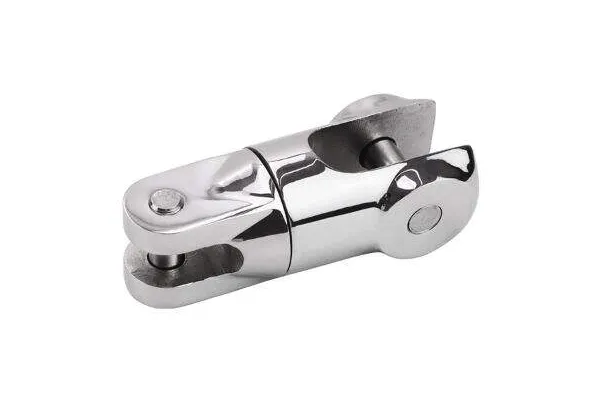
An anchor swivel is a mechanical connector designed to allow relative rotation between two connected components while maintaining a secure mechanical connection.
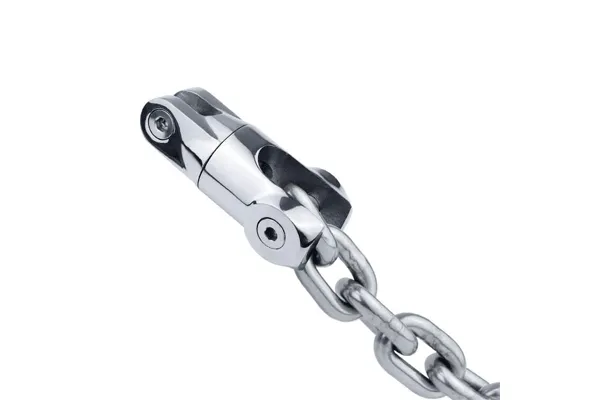
In a typical marine anchoring arrangement, it may be installed between the anchor and the anchor chain, depending on the anchor design and the manufacturer’s installation recommendations.
Unlike a conventional fixed connector, a swivel incorporates a rotating mechanism that allows connected parts to change their relative orientation without requiring the entire assembly to rotate together.
A typical anchor swivel may include:
- Connection Ends: Provide attachment points for the anchor, chain or compatible connecting hardware.
- Rotating Joint: Allows relative movement between the connected sections.
- Pins or Fastening Components: Secure the assembly and maintain mechanical integrity.
- Swivel Body: Houses the rotating mechanism and transfers loads through the connector.
The exact structure varies according to the product design. Some models use articulated joints, while others incorporate more specialized rotating connections for particular anchoring arrangements.
When selecting an anchor swivel, buyers should consider its mechanical construction, compatible connection dimensions, load ratings and intended marine application.
2. How Does an Anchor Swivel Work?
The working principle of an anchor swivel is based on controlled rotational movement.
During normal anchoring operations, a boat may change its heading because of wind direction, current and tidal movement. These changes can alter the relative orientation of the anchor, chain and connected hardware.
Without a suitable rotational connection, repeated changes in orientation may contribute to chain twisting or cause connected components to become improperly aligned.
An anchor swivel allows relative rotation at its connection point.
2.1 Allowing Relative Rotation
The rotating joint enables one connected section to turn relative to the other.
This movement helps accommodate changes in orientation during anchor deployment, retrieval and vessel movement.
Rather than forcing the entire connection assembly to rotate as one rigid unit, the swivel provides a designated point for rotational movement.
2.2 Reducing Anchor Chain Twisting
Anchor chain twisting can occur when repeated rotational movements accumulate within the anchoring arrangement.
A properly selected and installed swivel can help reduce this problem by allowing rotational movement at the connection point.
This is particularly useful when the anchor and chain need to change orientation during normal operating conditions.
However, a swivel does not guarantee that all chain twisting will be eliminated. Its effectiveness depends on the connection design, installation position, operating conditions and overall anchoring arrangement.
2.3 Supporting Smoother Anchor Handling
During anchor deployment and retrieval, connected components may change orientation as the anchor moves through the bow roller or other handling equipment.
A suitable swivel can help the connected parts align more naturally, reducing the need for manual correction in certain arrangements.
The actual improvement depends on the anchor geometry, connector design and compatibility with the vessel’s anchoring equipment.
3. Why Are Anchor Swivels Important in Marine Anchoring Systems?
Although an anchor swivel is a relatively small component, its function can influence the operation and maintenance of an anchoring system.
For marine equipment manufacturers and vessel operators, several practical considerations make this component worth evaluating.
3.1 Managing Rotational Movement
Wind and current can cause a vessel to change its heading while anchored.
A rotational connection helps accommodate changes in the relative orientation of the anchor and chain.
This is useful for anchoring arrangements where minimizing accumulated twisting is an important operational consideration.
3.2 Reducing Connection Misalignment
A fixed connection may restrict relative movement between connected components.
Depending on the arrangement, this can result in undesirable positioning or alignment during anchor handling.
A suitable swivel provides an additional degree of rotational freedom, helping connected components move into a more appropriate orientation.
3.3 Improving Anchor Deployment and Retrieval
Anchor retrieval involves several components working together, including the windlass, chain, connecting hardware and bow roller.
When the anchor and chain are not properly aligned, handling can become less convenient.
A correctly specified swivel can help the assembly rotate into a suitable orientation during retrieval, depending on the product design and installation.
3.4 Supporting Long-Term Hardware Maintenance
Marine anchoring equipment operates in environments exposed to saltwater, moisture, temperature changes and repeated mechanical loading.
A properly manufactured swivel with suitable materials and construction can support reliable operation over its intended service life.
Nevertheless, swivels remain mechanical components that require regular inspection. Corrosion, wear, deformation or restricted rotation should be addressed before continued use.
What Does an Anchor Swivel Do? How It Reduces Chain Twist in Marine Anchoring Systems
4. Anchor Swivel vs. Anchor Chain Connector: What Is the Difference?
Anchor swivels and anchor chain connectors are closely related marine hardware components, but they do not necessarily perform the same function.
An anchor chain connector primarily provides a mechanical connection between compatible components. Depending on its design, it may or may not allow relative rotation.
An anchor swivel, on the other hand, is specifically designed to provide rotational movement between connected sections.
The distinction is important when selecting hardware for a marine anchoring system.
| Comparison | Anchor Swivel | Conventional Anchor Chain Connector |
|---|---|---|
| Primary function | Provides rotational movement | Connects two components |
| Relative rotation | Designed to allow rotation | Depends on design |
| Chain twisting | Helps manage accumulated twisting | Does not necessarily address twisting |
| Construction | Includes a rotating mechanism | May use a fixed or articulated connection |
| Selection priorities | Rotation, load rating and compatibility | Connection strength, dimensions and compatibility |
Some specialized anchor connectors combine connection and rotational functions. Therefore, buyers should evaluate the actual construction rather than relying only on product names.
For example, a two-stage anchor connector may have a different mechanical arrangement from a conventional swivel. The product’s technical drawing and operating specifications should always be checked before installation.
5. How to Choose the Right Stainless Steel Anchor Swivel
Selecting an anchor swivel involves more than choosing a connector that physically fits the anchor chain.
For yacht builders, marine hardware distributors and equipment manufacturers, the following factors should be evaluated.
5.1 Stainless Steel Grade and Corrosion Resistance
Material selection is especially important for hardware operating in saltwater environments.
316 stainless steel is widely used in marine hardware because of its molybdenum-containing composition, which provides improved resistance to chloride-related corrosion compared with standard 304 stainless steel in many marine applications.
However, material grade alone does not guarantee corrosion-free performance.
Buyers should also consider:
- Actual material composition and verification.
- Surface finish and manufacturing quality.
- Crevices and areas where salt deposits may accumulate.
- Exposure conditions and maintenance requirements.
- Compatibility between connected materials.
For applications involving more aggressive marine environments, material selection should be evaluated according to the actual operating conditions.
5.2 Working Load Limit and Breaking Load
Load capacity is one of the most important considerations when purchasing an anchor swivel.
Buyers should distinguish between:
Working Load Limit (WLL): The maximum working load specified by the manufacturer for the product under defined conditions.
Minimum Breaking Load (MBL): The minimum load at which the product is expected to fail under specified testing conditions.
These values are not interchangeable.
A product’s breaking load should never be treated as its allowable working load.
When comparing different swivel models, check the manufacturer’s rated capacity, testing documentation and applicable safety factors.
5.3 Connection Dimensions and Compatibility
An anchor swivel must match the connected hardware.
Important dimensions include:
- Chain diameter and chain type.
- Connection opening dimensions.
- Pin diameter.
- Overall length and width.
- Compatibility with anchor attachment points.
- Clearance around the bow roller and windlass arrangement.
A connector that is too large may interfere with anchor retrieval, while an incorrectly sized connection may introduce improper loading or assembly problems.
For custom marine hardware projects, providing technical drawings or physical samples can help manufacturers assess compatibility.
5.4 Rotational Performance and Mechanical Construction
Not all swivel designs provide the same rotational characteristics.
Buyers should examine:
- Smoothness of rotation.
- Joint construction.
- Pin and fastening design.
- Resistance to binding.
- Ease of inspection and maintenance.
- Performance under the manufacturer’s specified loading conditions.
The rotating mechanism should operate as intended without excessive looseness, abnormal friction or visible deformation.
5.5 Surface Finish and Manufacturing Quality
Surface finishing is another important consideration for stainless steel marine hardware.
A well-finished surface can improve appearance, support easier cleaning and reduce areas where contaminants accumulate.
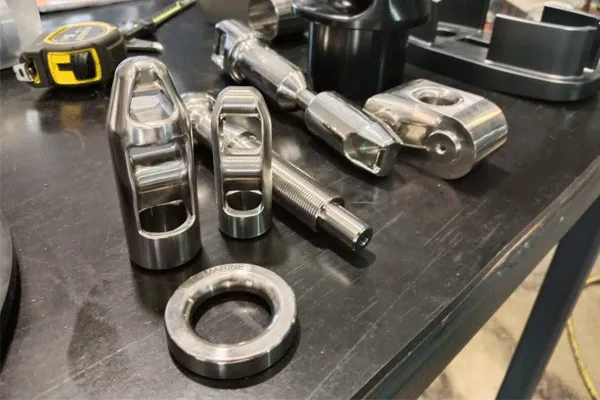
For yacht applications, precision machining, investment casting and polishing may be relevant manufacturing processes depending on the component’s design.
Buyers should assess dimensional accuracy, surface consistency, assembly quality and material verification rather than judging a swivel by appearance alone.
What Does an Anchor Swivel Do? How It Reduces Chain Twist in Marine Anchoring Systems
6. Common Installation and Maintenance Considerations
Even a high-quality anchor swivel may perform poorly if it is installed incorrectly or used outside its intended operating conditions.
Before installation, buyers and vessel operators should review the manufacturer’s instructions and confirm the compatibility of all connecting components.
Installation Considerations
Check the Connection Orientation
Install the swivel according to the manufacturer’s specified orientation. Some designs have particular attachment ends or installation requirements.
Verify Hardware Compatibility
Confirm that the anchor, chain, shackles and swivel are compatible in dimensions and rated capacity.
Check Bow Roller Clearance
The complete anchor assembly should pass through the bow roller or anchor handling arrangement without interference.
Inspect the Fastening Components
Ensure that pins, bolts and retaining components are correctly installed and secured according to the manufacturer’s instructions.
Confirm the Rated Load
The swivel should be selected as part of the complete anchoring system, with appropriate consideration given to the loads experienced by each component.
Routine Maintenance
Marine swivel connectors should be inspected regularly, particularly after demanding operating conditions.
Recommended inspection points include:
- Visible corrosion or surface deterioration.
- Cracks, deformation or unusual wear.
- Loose or damaged pins and fasteners.
- Restricted or irregular rotational movement.
- Excessive clearance or abnormal joint movement.
- Accumulated salt deposits and contamination.
Any component showing signs of structural damage or abnormal operation should be evaluated before further use.
Routine cleaning and maintenance should follow the manufacturer’s recommendations.
7. Why Manufacturing Quality Matters for Anchor Swivels
Anchor swivels combine mechanical connection, rotational movement and load-bearing requirements in a relatively compact component.
This makes manufacturing accuracy particularly important.
For marine hardware manufacturers, several production considerations influence the quality of finished swivel connectors.
Investment Casting
Investment casting can be used to produce complex stainless steel component geometries.
The process allows manufacturers to form integrated shapes and structural features that may be difficult to achieve through simpler manufacturing methods.
Casting quality, material integrity and dimensional consistency must be controlled throughout production.
Precision CNC Machining
CNC machining is important for producing accurate connection dimensions, pin openings and mating surfaces.
For swivel components, dimensional accuracy can influence assembly fit, rotational clearance and connection alignment.
Surface Polishing
Polishing improves the appearance of stainless steel marine fittings and provides a consistent surface finish.
For yacht hardware, mirror-polished finishes are commonly selected where appearance is an important purchasing consideration.
Material Verification and Quality Inspection
Material verification helps confirm that the specified stainless steel grade is used.
Finished-product inspections should also evaluate dimensions, assembly quality, surface condition and other requirements defined by the product specification.
For B2B buyers, requesting material documentation, inspection records and applicable load-testing information can help assess supplier reliability.
8. Why Source Anchor Swivels from an Experienced Marine Hardware Manufacturer?
For importers, distributors, yacht builders and marine equipment brands, selecting an anchor swivel supplier involves more than comparing unit prices.
A reliable manufacturing partner should understand marine hardware applications and be able to support consistent production quality.
Shenghui specializes in stainless steel marine hardware manufacturing, combining investment casting, precision CNC machining and surface finishing capabilities.
Our product range covers anchors, mooring hardware, deck fittings, Bimini top fittings and other stainless steel marine accessories.
For OEM and ODM projects, buyers can discuss customized dimensions, materials, finishes and product development requirements based on drawings, samples or technical specifications.
When evaluating a supplier, professional buyers should consider:
- Experience in stainless steel marine hardware production.
- Material verification and quality control procedures.
- Precision machining and casting capabilities.
- Consistency across production batches.
- Custom manufacturing and OEM/ODM support.
- Technical communication and after-sales service.
The right manufacturing partner can help buyers develop marine hardware products that meet their application, quality and sourcing requirements.
Conclusion
An anchor swivel is a small but functional component within a marine anchoring system. By allowing controlled rotation between connected parts, it helps manage anchor chain twisting, accommodate changes in orientation and support smoother anchor handling.
For professional marine hardware buyers, choosing the right swivel requires careful consideration of material grade, rated load, connection dimensions, rotational construction and manufacturing quality.
With experience in stainless steel marine hardware manufacturing, Shenghui supports standard and customized marine fitting requirements through investment casting, precision CNC machining and OEM/ODM services.
If you are sourcing stainless steel anchor connectors or developing customized marine hardware, contact our team to discuss your drawings, samples and technical requirements.
FAQ
What is the main purpose of an anchor swivel?
An anchor swivel allows relative rotation between connected components in an anchoring system. Its primary purpose is to help manage rotational movement and reduce accumulated anchor chain twisting.
Does an anchor swivel prevent anchor chain twisting?
An anchor swivel can help reduce chain twisting by providing a rotational connection. However, it cannot guarantee that twisting will never occur. Performance depends on the swivel design, installation and overall anchoring arrangement.
Does an anchor swivel make a boat more stable in rough seas?
Not directly. An anchor swivel does not stabilize the vessel or prevent it from rolling, drifting or dragging its anchor. It helps manage rotational movement within the anchoring connection.Safe anchoring in challenging conditions depends on the complete anchoring system, including anchor design, chain, rode, seabed conditions, vessel characteristics and operating procedures.
What is the difference between an anchor swivel and an anchor chain connector?
An anchor chain connector provides a mechanical connection between compatible components. An anchor swivel is specifically designed to allow relative rotation. Some specialized connectors combine both functions, so buyers should check the actual product design.
Is 316 stainless steel suitable for anchor swivels?
316 stainless steel is widely used for marine hardware because of its improved resistance to chloride-related corrosion compared with 304 stainless steel in many marine environments. Actual suitability depends on exposure conditions, manufacturing quality, surface condition and maintenance.
How often should an anchor swivel be inspected?
Inspection frequency depends on operating conditions, usage and the manufacturer's recommendations. Regular inspections should check corrosion, wear, cracks, deformation, fastening components and rotational movement. Any abnormal condition should be evaluated before further use.