





What Naval Architects Consider When Specifying Boat Anchors
Selecting an appropriate anchor is an important part of vessel design and marine equipment specification. For naval architects, boatbuilders, and marine equipment procurement teams, an anchor must be evaluated according to the vessel’s characteristics, operating environment, seabed conditions, and intended service requirements.
An anchor that is too small or unsuitable for the operating environment may fail to provide adequate holding performance. On the other hand, an unnecessarily large or heavy anchor can create additional demands on onboard storage, handling equipment, and the vessel’s anchoring arrangement.
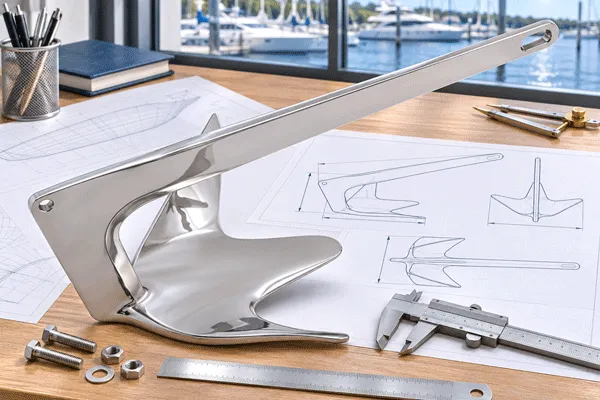
What Naval Architects Consider When Specifying Boat Anchors
There is no universal anchor specification that suits every vessel. Different anchor designs, materials, and dimensions offer different characteristics, making the selection process an engineering decision rather than simply a matter of choosing the heaviest available product.
This guide examines seven important considerations when specifying boat anchors, helping naval architects, boatbuilders, and marine equipment buyers evaluate anchor requirements more systematically.
1. Vessel Size, Displacement, and Operating Profile
The first step in specifying an anchor is understanding the vessel it will serve.
Vessel length is an important reference, but it should not be considered in isolation. Two boats with similar lengths can have different displacement, hull shapes, superstructures, and wind exposure.
These differences affect the loads that the anchoring system may experience.
Important vessel characteristics include:
- Vessel length: Provides an initial reference for selecting an appropriate anchor size range.
- Displacement: Determines the vessel’s mass under its specified loading condition.
- Beam: Influences vessel geometry and may form part of formal anchoring-equipment calculations.
- Frontal and profile areas: Affect the vessel’s exposure to environmental forces, particularly wind.
- Maximum operating speed: Helps establish the vessel’s broader operating profile.
- Deck and superstructure arrangement: Influences wind exposure, equipment installation, and anchor storage.
The intended operating area is equally important.
A vessel operating mainly in sheltered coastal waters may have different anchoring requirements from one expected to operate in more exposed waters with higher wind speeds and significant wave conditions.
For commercial vessels, applicable regulatory and classification requirements should be reviewed during the design process. Some formal anchoring-equipment standards consider displacement, vessel dimensions, exposed areas, wind conditions, wave height, and seabed characteristics.
The anchor should therefore be specified as part of the overall vessel design rather than selected solely from a general boat-length chart.
2. Anchor Size and Weight
Anchor size and weight are two closely related but different specification parameters.
An anchor must have sufficient dimensions and structural characteristics to develop the required holding performance. However, increasing its weight alone does not necessarily produce a proportional increase in holding capacity.
Several factors should be evaluated together:
Anchor Weight
The anchor’s mass influences handling, storage, deployment, and compatibility with the vessel’s anchoring equipment.
Fluke Dimensions
For fluke-style anchors, the size and effective surface area of the flukes influence how the anchor interacts with the seabed.
Shank and Crown Structure
The shank and crown connect the anchor’s working components and contribute to its overall structural arrangement.
Handling and Storage
The anchor must be compatible with the vessel’s available storage space, bow arrangement, and deployment equipment.
For professional vessel projects, the selected anchor should also be evaluated alongside its chain, rope, shackles, and other connecting components.
An appropriate specification balances holding requirements, structural integrity, handling convenience, and onboard installation constraints.
3. Anchor Material Selection and Service Life
Material selection influences an anchor’s weight, mechanical properties, corrosion behavior, manufacturing requirements, and maintenance expectations.
Different materials offer different advantages, and their suitability depends on the anchor design and intended application.
Steel Anchors
Steel is widely used in anchor manufacturing because of its mechanical strength and suitability for structural marine equipment.
However, corrosion protection is important, particularly when an anchor operates in saltwater environments.
Surface protection, coating quality, inspection, and maintenance should all be considered when evaluating steel anchors.
Aluminum Alloy Anchors
Aluminum alloy anchors can provide weight advantages compared with many steel designs.
Their lower mass can make handling and storage easier in suitable applications.
However, the alloy specification, structural design, and manufacturing quality must be evaluated to ensure the product meets its intended mechanical requirements.
Plastic and Other Lightweight Materials
Some specialized anchor products use non-metallic materials.
Their applications and load requirements differ from conventional metal anchors, so buyers should not assume that all lightweight materials are suitable for primary anchoring duties.
Stainless Steel Marine Anchors
Stainless steel is an important material option in marine hardware manufacturing because of its corrosion resistance, appearance, and suitability for marine applications.
Common stainless steel grades used in marine hardware include 304 and 316L, although the correct specification depends on the actual environment and product requirements.
When sourcing stainless steel anchors, buyers should evaluate:
- Stainless steel grade and material documentation.
- Structural dimensions and thickness.
- Mechanical strength and connection design.
- Surface finishing and polishing requirements.
- Manufacturing consistency and inspection procedures.
For marine equipment brands and distributors, material selection should be confirmed against the actual product specification rather than relying only on a general material description.
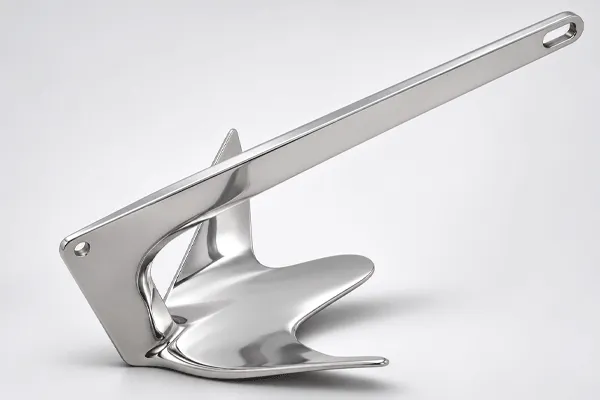
What Naval Architects Consider When Specifying Boat Anchors
4. Holding Power and Seabed Conditions
Holding power describes an anchor’s ability to resist movement after it has been properly set.
It is one of the most important performance considerations in anchor specification.
However, holding power is not determined by anchor weight alone. The seabed material, anchor geometry, penetration depth, deployment conditions, and loading direction all influence performance.
Different anchor designs interact differently with the seabed.
Sand Bottoms
Sand can provide favorable conditions for many fluke-style anchors.
The flukes penetrate the sediment and develop resistance as the anchor becomes embedded.
The density and composition of the sand can influence the resulting holding performance.
Mud Bottoms
Mud can vary considerably in consistency and shear strength.
Firm mud may provide suitable conditions for anchor penetration, while extremely soft mud may make it more difficult to establish reliable holding resistance.
Rocky Bottoms
Rocky seabeds generally present challenges for conventional fluke anchors because their working surfaces depend on penetrating the bottom.
An anchor may catch temporarily on an underwater obstruction without establishing a reliable embedded position.
Environmental Loading
Wind, current, waves, and vessel movement all contribute to the loads acting on an anchored boat.
Naval architects should therefore consider the expected operating environment when evaluating anchor performance.
The selection process should identify both the normal operating conditions and the more demanding conditions that the vessel may reasonably encounter.
5. Anchor Type, Geometry, and Design Technology
Different anchor designs use different structural arrangements to establish holding resistance.
Common categories include:
- Danforth or fluke anchors.
- Plow-style anchors.
- Claw-style anchors.
- Stockless anchors.
- Grapnel and hook-style anchors.
Each type has different geometry, penetration behavior, handling characteristics, and suitability for particular seabed conditions.
For example, a Danforth-style anchor uses two broad flukes that penetrate suitable sediment under tension.
Other anchor designs use different working shapes to establish resistance against the seabed.
When evaluating anchor design, buyers should pay attention to the following components:
Flukes
The fluke shape, area, thickness, and working angle influence penetration and seabed engagement.
Shank
The shank transfers the applied load from the anchor connection to its working structure.
Crown
The crown connects the flukes and shank and influences how the anchor is positioned and begins to set.
Stock and Stabilizing Components
Depending on the anchor design, these components help control orientation and setting behavior.
Manufacturing technology also matters.
Casting, machining, welding, forming, and surface finishing can all influence product consistency and structural quality, depending on the specific anchor construction.
For customized marine anchors, engineering drawings and dimensional specifications should be reviewed before production begins.
6. Manufacturing Quality and Product Reliability
A suitable anchor design still requires consistent manufacturing quality.
For boatbuilders, distributors, and marine equipment importers, the manufacturing process is an important part of supplier evaluation.
Several aspects deserve attention.
Dimensional Accuracy
The shank, flukes, crown, and connecting components should conform to the approved product drawings.
Structural Consistency
The anchor’s working components and connections should be manufactured according to the intended structural requirements.
Surface Quality
Polishing, finishing, and corrosion-protection processes should be appropriate for the specified material and application.
Material Verification
Material identification and documentation help buyers confirm that the supplied product matches the agreed specification.
Inspection and Quality Control
A defined inspection process helps maintain consistency between production batches and supports repeat purchasing.
When evaluating a marine hardware manufacturer, buyers should look beyond product appearance and examine the manufacturer’s production capabilities, inspection procedures, and ability to maintain consistent specifications.
7. Balancing Anchor Quality, Performance, and Cost
Cost is another important consideration during anchor specification.
The lowest purchase price does not necessarily represent the best long-term value.
An anchor should be evaluated according to its overall suitability, expected service life, maintenance requirements, and manufacturing quality.
A practical comparison should include:
| Evaluation Factor | What Buyers Should Review |
|---|---|
| Initial cost | Unit price and order quantity |
| Material | Grade, mechanical properties, and corrosion requirements |
| Design | Dimensions, geometry, and structural arrangement |
| Manufacturing | Casting, machining, welding, and finishing quality |
| Inspection | Material verification and dimensional checks |
| Service life | Expected maintenance and replacement requirements |
| Customization | Ability to meet project-specific drawings |
| Supply capability | Production consistency and delivery arrangements |
For OEM buyers and marine equipment distributors, long-term supplier consistency is also important.
A manufacturer that can maintain agreed dimensions, material specifications, and finishing standards can help reduce purchasing uncertainty across repeat orders.
8. A Practical Boat Anchor Specification Checklist
Before placing an anchor order or approving a design, naval architects and procurement teams can use the following checklist.
Vessel Information
- Vessel length and displacement.
- Beam and superstructure dimensions.
- Intended operating area.
- Expected environmental conditions.
Anchor Requirements
- Anchor type and working design.
- Overall dimensions and weight.
- Fluke geometry and angle.
- Material and surface finish.
- Connection and attachment dimensions.
Manufacturing Requirements
- Technical drawings.
- Material specifications.
- Dimensional tolerances.
- Surface treatment requirements.
- Inspection and documentation requirements.
Procurement Requirements
- Required quantity.
- OEM or private-label requirements.
- Packaging and shipping specifications.
- Supplier production capability.
- Long-term supply arrangements.
Completing these details before production helps align the anchor design with the vessel’s engineering and purchasing requirements.
Conclusion
Specifying a boat anchor requires a combination of vessel assessment, material selection, design evaluation, and manufacturing-quality considerations.
For naval architects and boatbuilders, the most important objective is to select an anchor that matches the vessel’s displacement, operating profile, seabed conditions, and expected environmental loads.
Anchor weight is only one part of the decision. Material properties, fluke geometry, holding performance, structural design, and long-term quality all contribute to the suitability of the final product.
For marine equipment distributors, boatbuilders, and OEM buyers, working with a manufacturer that understands stainless steel marine hardware and customized production requirements can make the sourcing process more efficient.
Shenghui provides stainless steel marine hardware manufacturing and OEM/ODM customization services. Explore the Anchor Series or contact the team to discuss your drawings, material requirements, and project specifications.
Contact Shenghui to discuss your custom marine anchor and hardware requirements.
FAQ
What factors should naval architects consider when specifying boat anchors?
Key factors include vessel length, displacement, beam, windage, operating conditions, seabed composition, anchor type, material, dimensions, holding requirements, and applicable regulatory standards.
Does a heavier boat always need a heavier anchor?
Not necessarily. Anchor selection should consider vessel dimensions, exposed areas, environmental loading, anchor design, and applicable sizing requirements. Weight alone does not determine holding performance.
Which materials are commonly used for marine anchors?
Steel, stainless steel, and aluminum alloys are used in different anchor designs. Some specialized products also use non-metallic materials. The appropriate material depends on structural requirements, corrosion exposure, weight, and intended application.
Why is seabed composition important when selecting an anchor?
Different seabed materials provide different penetration and holding characteristics. Sand and suitable mud can support effective fluke penetration, while rocky or extremely soft bottoms may create setting challenges.
How can buyers evaluate the quality of a marine anchor manufacturer?
Buyers should review material specifications, manufacturing processes, dimensional control, inspection procedures, documentation, customization capabilities, and consistency between production batches.
Can marine anchors be customized for OEM projects?
Customization may involve dimensions, material selection, structural details, surface finishing, and branding. Buyers should provide technical drawings or reference samples so the manufacturer can evaluate the project requirements.